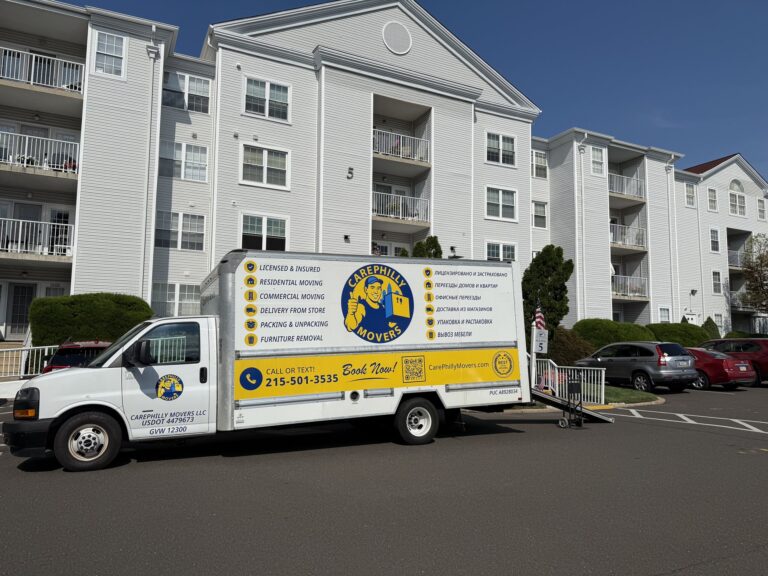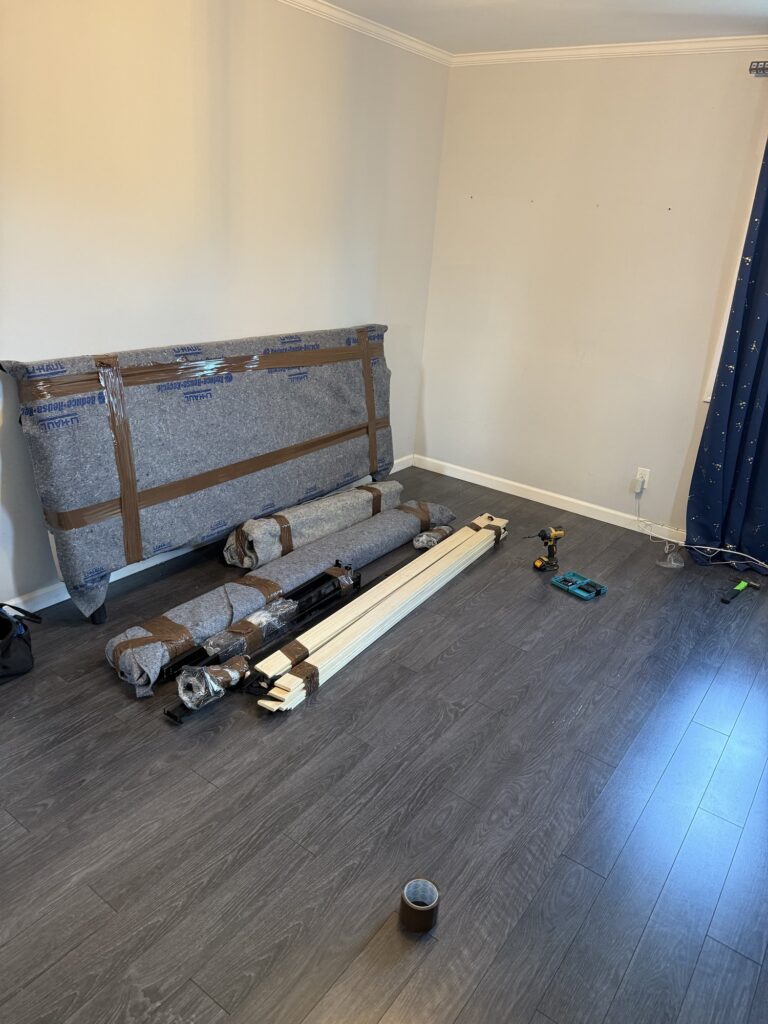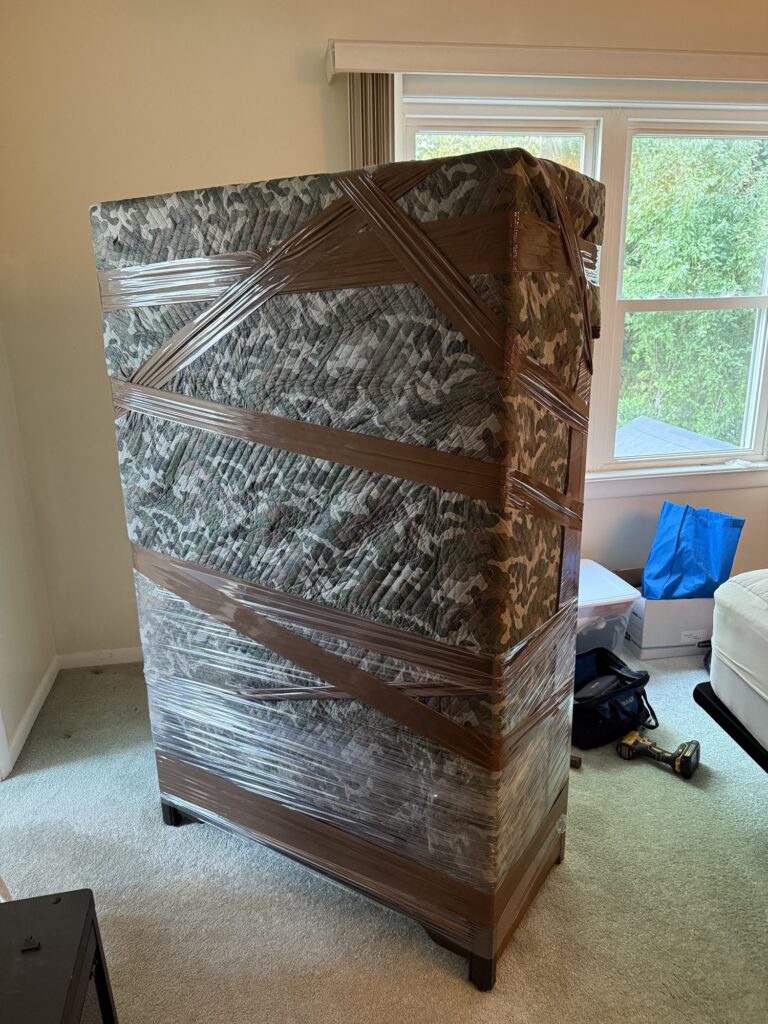
Do movers disassemble furniture? Yes. On a residential move, our crew takes apart pieces that won’t fit through a doorway, around a turn or up a staircase whole. We wrap the parts in moving blankets and put them back together at the new place. When you request a quote, list the pieces you expect to come apart and show them in your photos or video. That way the disassembly time is planned before moving day.
Key takeaways: furniture disassembly on a residential move
- Yes, we take furniture apart and put it back together on residential moves. Bed frames often come apart.
- Pieces that come apart are wrapped in moving blankets for the trip.
- Rough time, very approximate: studio 3–4 hours, one-bedroom 4–6, two-bedroom 6–8, house 8–12 or more. Furniture that has to come apart is one of the things that moves that number.
- The exact price comes from photos or a video sent through the quote form.
- We work in Pennsylvania only.
Yes, movers disassemble furniture: here is what that covers
Taking furniture apart and putting it back together is a normal part of residential moving. It is not an exotic add-on. On a residential move, we took a bed frame apart and wrapped it in moving blankets. Furniture disassembly comes first. Furniture assembly follows at the other end.
Ask one question about each piece: will it get from the room to the truck in one unit without forcing it? A piece comes apart for one of two reasons:
- It won’t clear a door frame, a tight turn in a hallway or a stairway as one unit.
- Its parts travel safer separately than as one big, awkward unit.
A queen bed frame with a tall headboard is the classic example. Assembled, it is too wide and too rigid to carry. Taken apart, it becomes a headboard, a footboard and two rails, and each of those is easy to carry.
What a mover actually does on a residential move
A mover is the crew and truck that loads, protects, transports and unloads your household goods. A residential move usually covers the following work, whether it’s an apartment or a house:
- Take apart what won’t fit whole.
- Wrap the furniture and its parts.
- Carry everything out and load the truck.
- Drive to the new address and unload.
- Reassemble the furniture.
Disassembly is one step in that work, not a separate trade. CarePhilly Movers is licensed by the Pennsylvania PUC as a household goods carrier, utility code 8928034.
We also take on other kinds of moves:
- Commercial moving, including office moving. Desks, conference tables and workstations come apart the same way a dining table does.
- Long distance moving within Pennsylvania, for moves from Philadelphia to another part of the state.
All of these moves stay inside Pennsylvania.
Which furniture comes apart and which travels whole
Furniture with long rails, wide tops or attached mirrors usually comes apart for a move. Compact solid pieces usually travel whole.
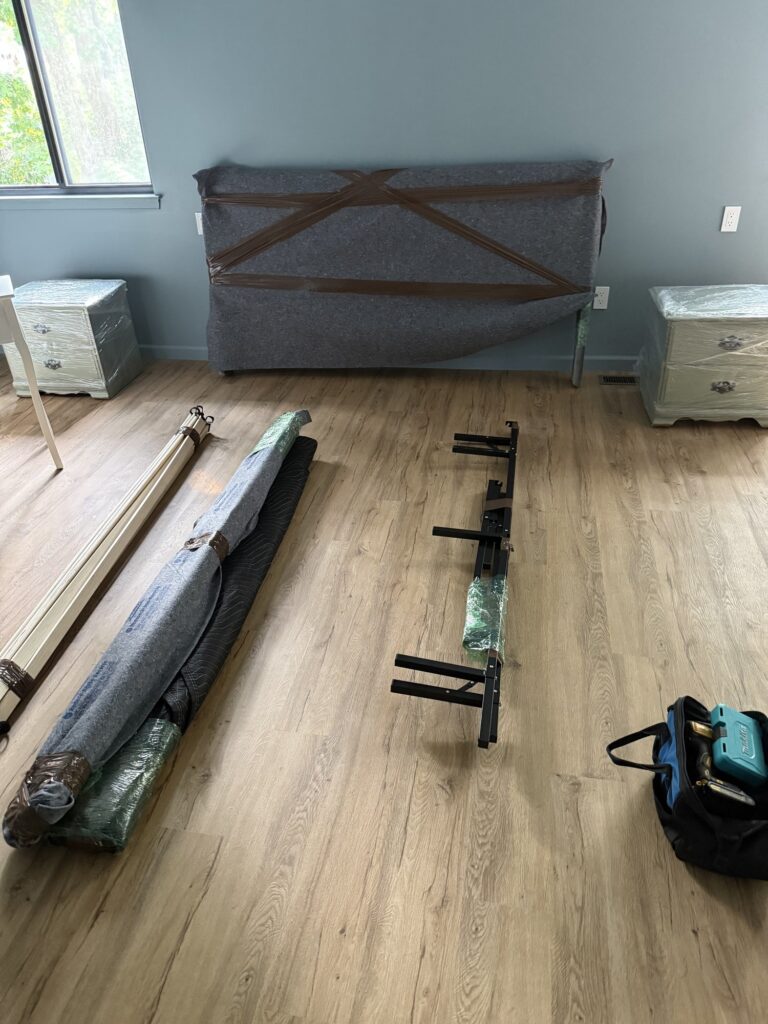
On a bedroom floor, our crew laid out a wrapped headboard and bed rails. Separated like that, a bed frame stops being one rigid, awkward unit. It becomes a few flat parts that a crew can carry one at a time. The table below shows how other furniture typically breaks down:
| Furniture type | What usually comes off | Why it comes apart |
|---|---|---|
| Bed frame | Headboard, footboard, side rails, slats | Too long and rigid to turn in a hallway or stairway |
| Dining table | Legs, leaves | Legs snap under stress; the top fits through a door on edge |
| Desk | Hutch, return, legs | Too heavy and top-heavy as one unit |
| Bunk bed or crib | Side panels, rails, ladder | Too tall and wide to carry assembled |
| Sectional sofa | Sections unhook | Each section is its own manageable piece |
| Dresser with a large mirror | Mirror | Glass is safer wrapped on its own |
These pieces rarely need to come apart:
- Solid dressers, with the drawers secured
- Small tables
- Chairs
Disassembly has a cost, though. If a piece fits through every door and stairway whole, taking it apart only adds time. In that case it gets wrapped and carried out assembled. Moving heavy furniture goes smoother when nobody unscrews what doesn’t need it.
How a bed frame comes apart and gets wrapped
The bed frame is the classic disassembly job. It has few parts, but they are long and rigid, and they are held together by hardware specific to that frame.
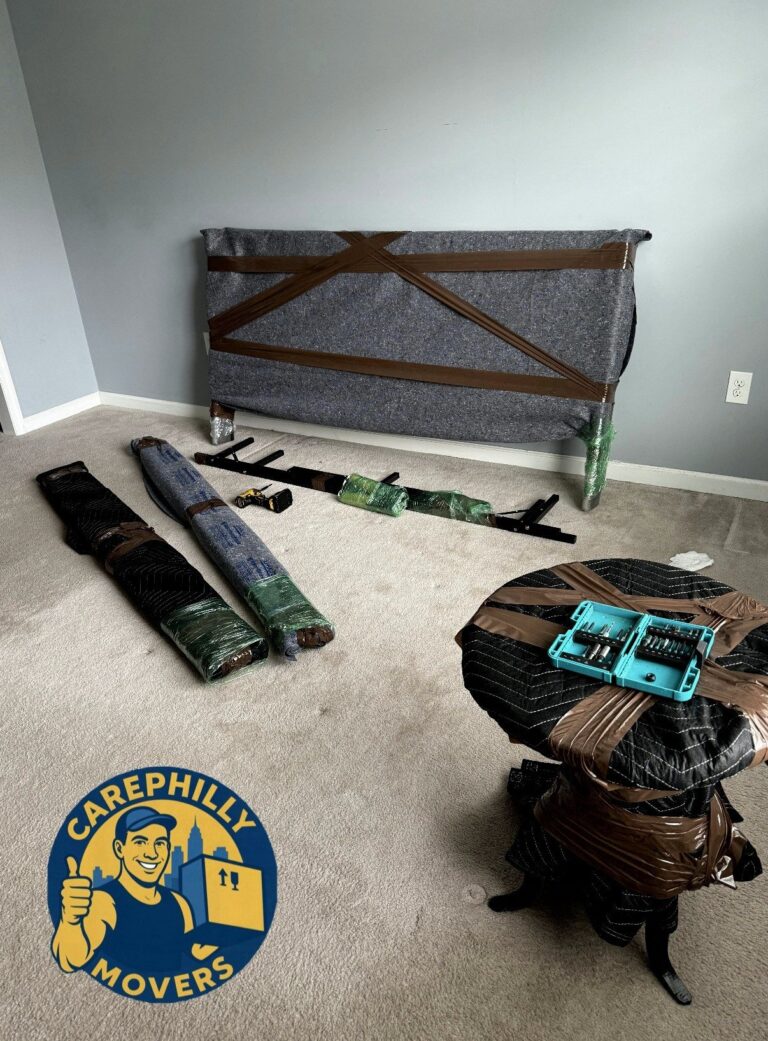
On a residential move, our crew took a bed frame apart and wrapped the parts in moving blankets. A bed frame usually comes apart top-down:
- The mattress and box spring come off and get covered.
- The slats or center support come out.
- The side rails detach from the headboard and footboard. Depending on the frame, bolts, cam locks or hook-in brackets hold them.
Hook-in brackets lift out. Bolts and cam locks have to be unscrewed. Packing supplies each have their own job. Moving blankets cushion the wood and keep corners from rubbing. When movers use stretch film, it goes over the blankets to hold them in place and keep the parts bundled.
The standard practice with hardware is a labeled bag kept with the frame it came from. The most common mistake in furniture disassembly is losing a single bolt that is specific to that frame. A frame-specific bolt can be hard to match, and the bed won’t go back together properly without it.
Getting wrapped pieces through doorways and up stairs
The narrow spots in a home decide what comes apart, and in Philadelphia they are often built into the house itself. Rowhouses are the most common type of home in the city. Trinity houses are the hardest case. They stack three or four floors of about one room each, joined by small winding stairways, which makes moving furniture between floors hard.
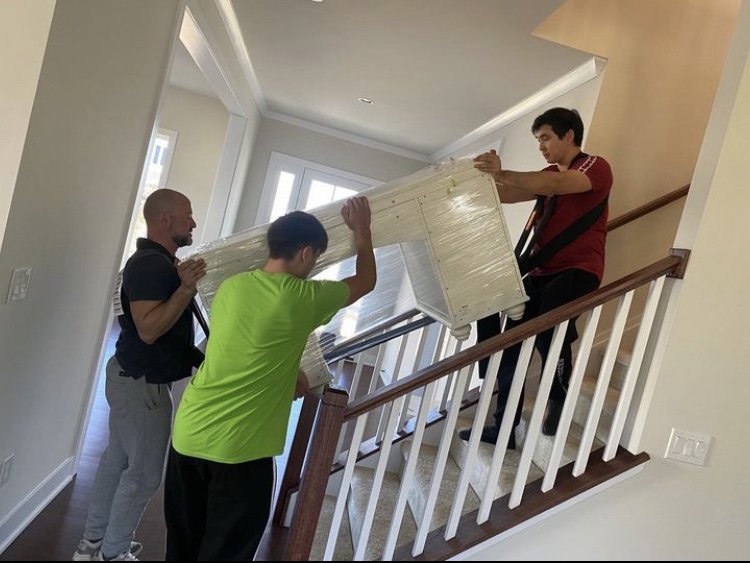
A tabletop on its own is a flat panel, and a crew can manage a flat panel where a full table won’t go.
On a winding stairway, a flat panel can be tipped and angled around a turn. An assembled table can’t, because its legs catch on the walls and the railing. That is where taking a piece apart stops being optional.
On a straight, wide staircase, the same table might go up whole. Showing your stairs in the quote photos or video settles the question before moving day.
Glass tops and other pieces that need extra care
Glass tabletops, mirrors and marble tops become the most fragile parts of a piece once they’re separated. So the top and the base are handled as two different items.
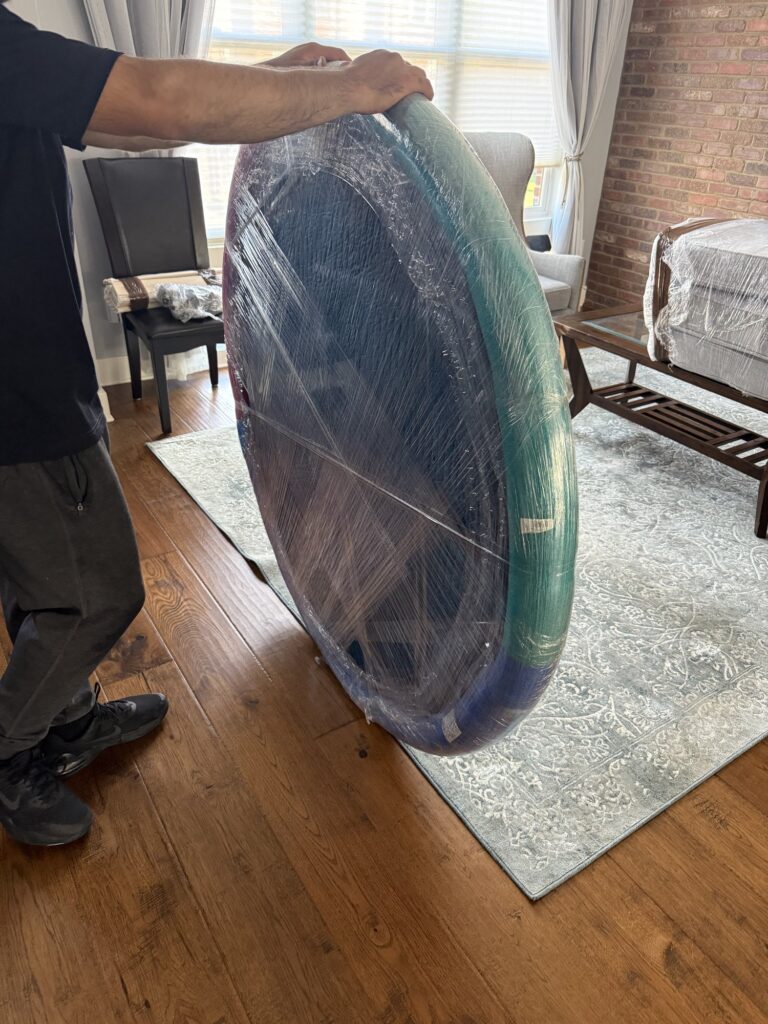
One of our movers handles a round glass tabletop, wrapped for the move. Glass tops are usually carried on edge, separately from the base, for two reasons:
- When glass stands on edge, nothing can be stacked on its face.
- When it stands on edge, it doesn’t flex under its own weight the way a large flat sheet can when it is carried flat.
For a piece that needs a rigid case rather than blankets, we offer crating. For moves where handling matters most, see our white glove moving service.
A piano is its own job, with its own weight, balance and equipment. That work is covered on our piano movers page.
Putting furniture back together at the new place
Yes, moving companies assemble furniture. Furniture assembly is one of our services, and it covers putting back together the pieces that came apart for the move.
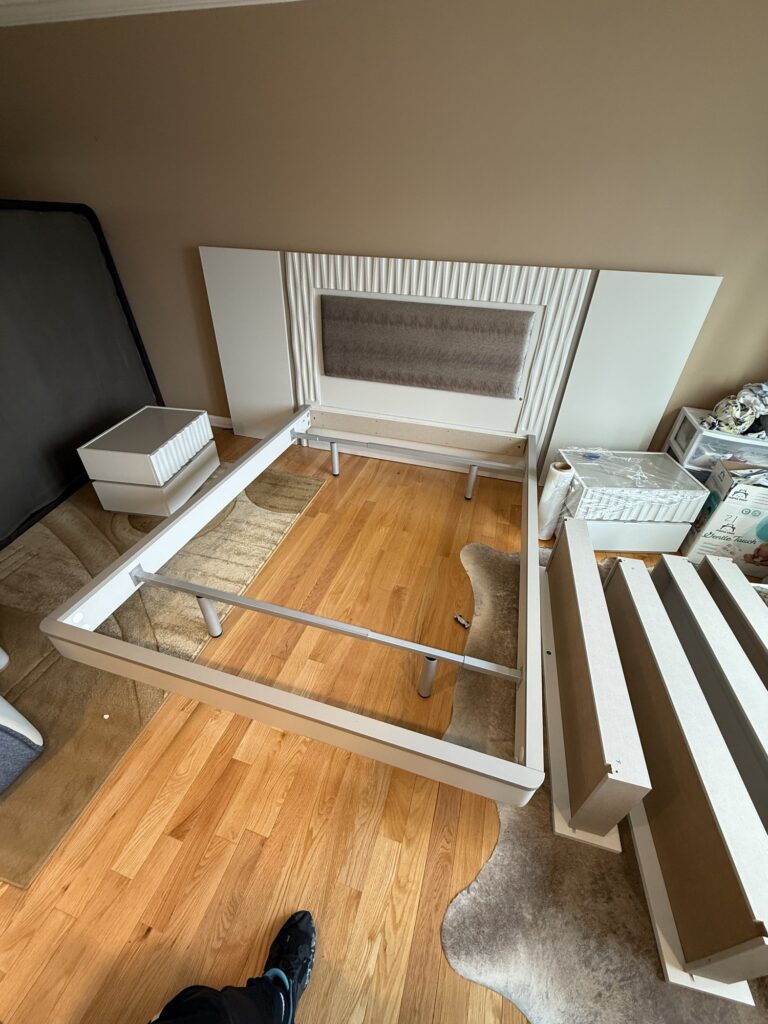
Our crew puts a bed frame together in a bedroom, with the furniture assembly underway. Reassembly follows a few craft rules:
- It runs in reverse order. The headboard and footboard stand up, the rails hook or bolt in, then the slats or support go back, and the mattress goes on last.
- It goes fastest when the spot where the bed will stand is already clear.
- Bolts on particle board get snugged firmly, not cranked. Over-tightening strips the material, and the joint loosens for good.
Looking for movers that disassemble and reassemble furniture in Philadelphia or the suburbs we serve? Mention both in your quote request. If you need a new piece built without a move, see our furniture assembly in Philadelphia page.
What a finished reassembly looks like
A finished reassembly is a bed that stands square, with tight joints, in its new room. The parts come back together as one piece.
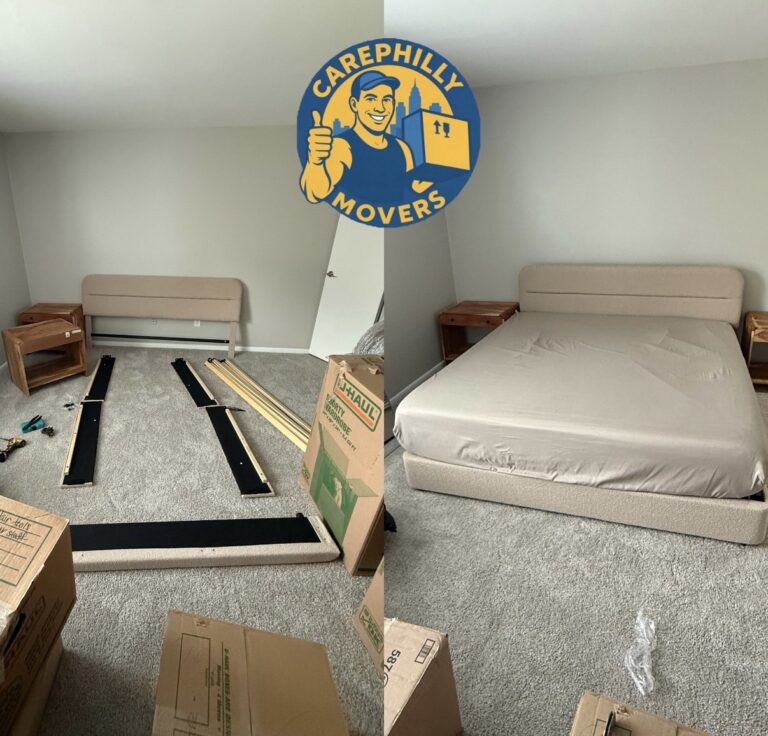
Our crew’s work is shown at both ends: a bed frame in parts on the floor, and the same bed assembled after the move. Between those two states come the wrapping, the carrying and the drive.
Furniture assembly and disassembly sit at the two ends of the same move. The first step makes the piece movable, and the last makes it usable again.
Can you hire someone just to dismantle furniture?
Yes, you can hire someone to dismantle furniture without booking a full move. Taking a piece apart fits two common situations:
- Small moves. A single room or a few pieces going to a new place. Our small moves service covers this.
- Furniture disposal. An old sofa or bed frame often has to come apart just to get out of the house.
Sometimes doing it yourself is the better choice. If you built a flat-pack piece yourself and still have the instructions, taking it apart is often a quick job. Reversing your own steps costs nothing.
Some pieces need a different specialist. Anything fixed to plumbing or gas, such as a refrigerator with a water line, a gas range or a washer, needs a licensed specialist to disconnect it first. That is not mover work. Once it’s disconnected, we can move it.
Do movers pack for you, too?
Yes, movers can pack for you. Packing is a service we offer, and it is separate from wrapping furniture.
The difference is what gets protected:
- Wrapping covers the piece itself. Blankets go around a dresser or a bed frame, and that is part of moving the furniture.
- Packing covers what’s inside the furniture and around the home. Dishes, books, clothes and the contents of drawers and shelves go into boxes.
For what the service covers, see our packing services in Philadelphia page. For a broader walk-through of how professional packing works, read the packing services guide.
What movers will not move or take apart
Some items don’t go on our truck unless approved in writing. Others travel with you instead:
| Not on our truck | Travels with you |
|---|---|
| Hazardous materials, explosives, firearms, illegal substances, flammable liquids, propane tanks and perishable food, unless approved in writing | Cash, jewelry, documents, medications and other high-value items travel with the customer, not on our truck |
We also don’t take moves outside Pennsylvania. A move from Philadelphia to New Jersey, Delaware or any other state is not one we take.
How disassembly affects time on moving day
Disassembly adds time to a move, and it is one of several things that set the total. Our rough guide is very approximate:
| Home size | Rough time (very approximate) |
|---|---|
| Studio | 3–4 hours |
| One-bedroom | 4–6 hours |
| Two-bedroom | 6–8 hours |
| House | 8–12 hours or more |
These factors change the total time:
- How much stuff there is
- Stairs and floors
- The elevator
- How far the truck can park
- Furniture that has to come apart
- The distance between addresses
In Philadelphia, a truck parked on a city street needs a Temporary No Parking permit. Request it at least four business days before the move. Forty feet of curb is about two parking spaces.
Price depends on the amount of work, and we give the exact figure from photos or on site. For more, see how much movers cost.
What to have ready before the crew arrives
Disassembly goes fastest when the furniture is already empty and the crew knows the tight spots in advance. Before moving day:
- Strip the beds. Empty the drawers and clear the desk tops.
- Set aside any assembly manuals or spare hardware you have.
- In your quote request, list which pieces you expect to come apart.
- Show narrow stairs, tight turns and small doorways in your photos or video.
Some apartment buildings ask for a certificate of insurance before move day. Our certificate of insurance guide explains how COI assistance works. For the full list, see the apartment moving checklist.
Not every move is planned weeks ahead, and we take last-minute moves too. As Catherine Hankerson wrote on Google: “Great company. I called and was able to get my belongings moved the same day. Great company and great service. Highly recommend”
When you’re ready, send photos or a video through the quote form. We’re open 7 days a week, 9 a.m. to 9 p.m.
Frequently asked questions
- Do movers take apart your furniture for you?
Yes. On residential moves, we take apart pieces that won’t fit through doors or up stairs whole, such as bed frames. We wrap the parts in moving blankets, then put them back together at the new place. List those pieces in your quote request so the time is planned in advance.
- Can I hire someone to dismantle furniture?
Yes. Disassembly fits small moves and furniture disposal, not only full moves. If you built a flat-pack piece yourself and still have the instructions, taking it apart is often a quick DIY job. Anything connected to plumbing or gas needs a licensed specialist to disconnect it first. After that, we can move it.
- Should I disassemble furniture when moving?
Only when a piece won’t clear a doorway, a turn or a stairway whole, or when its parts travel safer apart. Bed frames, table legs and glass tops are common examples. If a piece fits whole, taking it apart only adds time.
- Do moving companies assemble furniture?
Yes. We put back together what we took apart, and furniture assembly is also available on its own through our furniture assembly page. Clear the spot where the bed or table will stand at the new place, so reassembly can start as soon as the parts come off the truck.
- What happens to the screws and bolts during a move?
Standard practice is to keep each piece’s hardware together and with its own frame, often in a labeled bag. That way nothing gets mixed between pieces. The common problem is a lost frame-specific bolt that can be hard to match. If you have spare hardware or the manual, set it aside for the crew.
- Should I take a glass tabletop off the base myself?
It’s better to leave it for the crew. Glass tops are usually moved separately from the base, wrapped and on edge, so nothing rests on their face. For a piece that needs a rigid case instead of blankets, crating is also available.
- Do movers pack for you?
Yes. Packing is a separate service from wrapping furniture. Wrapping protects the piece itself with blankets. Packing boxes up what’s inside it and around it: dishes, books, clothes and drawer contents. Details are on our packing services page.
- What will movers not move?
Not on our truck: hazardous materials, explosives, firearms, illegal substances, flammable liquids, propane tanks and perishable food, unless approved in writing. Cash, jewelry, documents, medications and other high-value items travel with you, not on our truck. We only move within Pennsylvania, so we don’t take out-of-state moves.